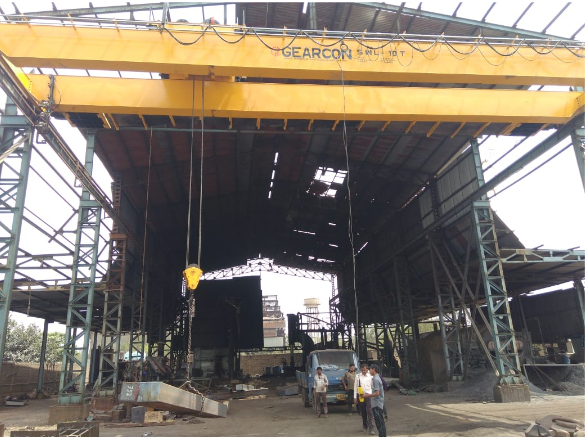
Best Overhead EOT Crane Manufacturers in India for Reliable Material Handling Solutions
Industrial facility operations depend entirely on fast, reliable, and smooth material movement workflows. Moving multi-ton plates of raw structural steel, casting ladles filled with boiling liquid metal, or complex sub-assembly frames across a manufacturing floor requires specialized structural equipment designed to endure extreme mechanical stress.
Securing a partnership with specialized overhead EOT crane manufacturers in India remains a critical strategic decision for expanding business systems. This technical analysis breaks down the leading configurations, engineering criteria, and operational standards that define high-performance material handling equipment.
Why Reliable Material Handling Systems Are Essential for Modern Industries
Importance of Efficient Material Handling
Efficient material handling directly underpins modern plant logistics. By establishing a continuous, controlled flow of raw inputs and completed assemblies through production bays, a facility effectively removes assembly bottlenecks, minimizes handling damage, and eliminates physical congestion on warehouse floors.
How EOT Cranes Improve Industrial Productivity
Electric Overhead Traveling (EOT) cranes optimize material transit by moving items smoothly through overhead building spaces. This three-axis movement approach unlocks the complete factory footprint, enabling rapid raw material staging and accelerated loading cycles that ground-level vehicles cannot match.
Role of Cranes in Reducing Operational Downtime
When heavy components must move via makeshift setups or manual lines, operations frequently stall. High-durability structural cranes provide repeatable, non-stop lifting power, keeping processing machines fully loaded and ensuring support workflows remain stable over multi-shift cycles.
Safety Benefits of Advanced Overhead Cranes
Manually handling or improperly rigging heavy loads introduces major workplace hazards. Integrating fully certified industrial overhead crane networks reduces physical exposure for floor crews by shifting heavy handling tasks to an elevated, automated mechanical system.
Understanding Overhead EOT Cranes and Their Industrial Applications
What is an Electric Overhead Traveling Crane?
An electric overhead traveling crane is a highly specialized lifting machine composed of a parallel runway assembly with a traveling bridge spanning the factory bay. Driven by independent electric motors, it handles heavy materials smoothly along the length, width, and height of a facility.
Key Functions of Overhead Cranes
- Vertical Hoisting: Smooth, controlled lifting and lowering of heavy loads using high-tensile wire ropes.
- Cross Travel (CT): Precise horizontal movement of the lifting trolley along the parallel bridge girders.
- Long Travel (LT): Longitudinal transit of the entire bridge structure down the building's elevated gantry rails.
Main Components of EOT Crane Systems
- Bridge Girders: The primary horizontal steel box beams that sustain the weight of the trolley and the suspended load.
- End Carriages: Structural wheel assemblies mounted to both ends of the bridge to drive the crane long-travel motion.
- Hoist Trolley (Crab Frame): The mobile frame carrying the primary wire rope drum, motors, and integrated braking units.
- Rope Drum: A carbon steel cylinder grooved to guide the wire rope without overlap.
- Brake Assemblies: Electro-hydraulic thruster or electromagnetic brakes deployed across all travel drives to secure loads instantly.
- Central Control Panel: Enclosures containing the Variable Frequency Drives (VFDs) and electrical protective relays.
How EOT Cranes Support Heavy Material Movement
By deploying a balance of structural rigidity and electrical torque control, these cranes lift dense, awkward, or high-temperature loads and place them smoothly within millimeter tolerances. This provides direct mechanical support to manufacturing steps like furnace charging, assembly line positioning, and heavy shipping fulfillment.
Key Features of High-Performance Overhead EOT Cranes
Heavy Load Carrying Capacity
Premium EOT setups feature highly optimized cross-sections capable of handling heavy structural weights. Advanced designs utilize finite element analysis to ensure the main bridge box plate resists flexing under extreme point loads.
Precision Lifting Technology
Modern crane systems employ specialized closed-loop micro-speed mechanisms. By scaling motor speeds down to a small fraction of standard operational velocities, operators can execute ultra-precise positioning tasks without risking sudden load drops or structural impacts.
Advanced Safety Mechanisms
High-performance systems use layered electronic and mechanical safety barriers, including automated primary hook limit switches, physical anti-derailment end stops, mechanical wheel drop catches, and real-time electronic overload protection arrays.
Energy-Efficient Crane Systems
New-generation crane layouts leverage regenerative drive networks. When a heavy load is lowered or long-travel motion decelerates, the system captures the generated kinetic energy and feeds it directly back into the plant's power grid, reducing overall utility costs.
Smart Automation & Remote Monitoring
Equipping cranes with wireless radio remote controls (RRC) and automated crane monitoring units removes the operator from volatile factory zones while providing real-time data on operating hours, thermal metrics, and motor duty cycles.
Best Overhead EOT Crane Manufacturers in India
Gearcon Engineering – Trusted Industrial Crane Manufacturer
Company Background
Gearcon Engineering has built a strong reputation as an authority among overhead EOT crane manufacturers in India. Originating in 1993 as a specialist in high-precision industrial gears and heavy-duty gearboxes, the company expanded its manufacturing expertise in 2012 to deliver fully integrated industrial crane networks. Operating out of heavy manufacturing hubs in Tedesara and Durg (Chhattisgarh), the brand stands for absolute structural reliability and independent engineering control.
Specialization in Material Handling Solutions
Gearcon specializes in engineering durable overhead crane installations designed to operate in high-dust, high-vibration, and elevated ambient temperature environments, with a particular focus on high-reliability industrial setups.
Types of Overhead Cranes Offered
- Single Girder Overhead Cranes (including low-headroom variations)
- Double Girder Industrial Cranes
- Heavy-Duty Gantry & Goliath Systems
- High-Temperature Hot Metal / Ladle Foundry Cranes
Industries Served
Primary metallurgical steel processing plants, heavy mineral mining installations, continuous cement production complexes, and general fabrication facilities. Notably, the firm operates as an approved ancillary supplier to major public-sector industrial giants like the SAIL / Bhilai Steel Plant.
Manufacturing Capabilities
Because Gearcon maintains full control over its gear slicing, casing machining, and structural fabrication lines, it manufactures core hoisting gearboxes, rope drums, and wheel end trucks completely in-house. This configuration eliminates reliance on third-party commercial components.
Custom Crane Engineering
The company excels at tailoring structural parameters to complex layouts, including developing custom long-span bridges, modifying crane headroom profiles for restricted spaces, and designing high-efficiency multi-speed hoist arrangements.
Quality Certifications
All crane systems are built in compliance with Indian design standards (IS 3177, IS 4137, and IS 807) and undergo structural tracking under strict ISO quality workflows.
Service & Maintenance Support
Provides end-to-end support services including complete on-site track erection, certified proof-load testing, structural safety audits, and round-the-clock emergency field-engineering breakdown service.
Key Advantages of Choosing This Manufacturer
Partnering with Gearcon provides direct access to robust crane systems equipped with heavy-duty, in-house machined gear sets that offer superior wear resistance compared to standard commercial components. Their structural designs prioritize long-term rigidity and low maintenance overhead, making them an ideal selection for rigorous industrial applications.
How Top Crane Manufacturers Ensure Reliable Material Handling
Precision Engineering Standards
Leading manufacturers maintain strict structural alignment tolerances across all machining processes. Main bridge plates undergo automated submerged arc welding (SAW) to eliminate weld porosity and prevent micro-frictional structural dragging.
Load Testing & Safety Inspection
Before formal deployment, completed crane bridges undergo testing up to 125% of their rated working load limit. Engineers utilize non-destructive testing (NDT), such as ultrasonic or radiographic scans, to confirm the integrity of primary structural joints.
Use of High-Quality Components
Top-tier industrial crane assemblies incorporate high-grade carbon steels (such as IS 2062) for structural elements, alongside forged steel wheels, vacuum-degassed gear trains, and Class-F insulated continuous-duty crane motors.
Automation Integration
By integrating Variable Frequency Drives (VFDs) across long-travel and cross-travel motions, manufacturers eliminate abrupt start-stop transitions. This smooth acceleration prevents load sway and minimizes stress on mechanical gear assemblies.
Preventive Maintenance Support
Leading engineering partners back their equipment with regular structural inspection schedules, laser-guided track alignment audits, and structured annual maintenance contracts (AMCs) to catch wear patterns early.
Industries Benefiting from Overhead EOT Crane Solutions
- Steel & Metal Processing Plants: Moving heavy scrap charge buckets, handling structural metal coils, and safely transporting ladles filled with liquid steel across casting bays.
- Automotive Manufacturing Units: Supporting automated component presses and handling massive vehicle chassis stamping dies safely.
- Warehouses & Logistics Centers: Rapid unloading, dense vertical stacking, and organized staging of heavy palletized components.
- Power Generation Facilities: Conducting maintenance and overhauls on heavy turbine rotors and alternator blocks within generator halls.
- Cement & Mining Industries: Handling heavy clinker materials and bulk crushed ores using automated dual-line grab buckets.
- Infrastructure & Construction Projects: Staging precast concrete segments, handling massive structural beams, and moving heavy machinery components.
Single Girder vs Double Girder EOT Cranes: Which is Better?
Selecting the optimal overhead crane design depends on specific payload weights, available headroom, and factory building constraints:
|
Evaluation Metric |
Single Girder EOT Cranes |
Double Girder EOT Cranes |
|
Structural Design |
A single bridge beam with the hoist hanging from the lower flange. |
Two parallel bridge beams with the trolley running on top-mounted rails. |
|
Lifting Capacity |
Optimized up to 20 Tons maximum payload. |
Engineered for heavy loads up to 80+ Tons. |
|
Maximum Span |
Generally effective up to 30 meters. |
Highly stable across wide spans exceeding 40 meters. |
|
Hook Height Limits |
Lower vertical hook clearance due to the underslung hoist profile. |
Maximum vertical hook clearance since the hoist sits between the beams. |
|
Deadweight Factor |
Lightweight; exerts lower wheel loads on building support structures. |
Heavier deadweight; requires reinforced runway tracks and support columns. |
|
Maintenance Profile |
Simple layout; quick component access for basic maintenance. |
Features full walkways on the bridge for safe maintenance access to heavy machinery. |
|
Ideal Setting |
Light assembly lines, small machine shops, and warehouses. |
Heavy foundries, steel mills, and heavy engineering facilities. |
Important Factors to Consider Before Selecting an EOT Crane Manufacturer
Industry Experience & Expertise
Look for an engineering partner with a proven history in structural metal fabrication. A manufacturer with decades of field-testing understands how to build crane bridges that resist operational stress and structural fatigue over long life cycles.
Product Quality & Compliance Standards
Verify that the manufacturer adheres strictly to IS 3177 (mechanical/electrical standards), IS 4137 (heavy-duty metallurgical codes), and IS 807 (structural steel standards).
Crane Customization Options
Every factory footprint features unique constraints. Your supplier must possess the in-house design capability to calculate custom gear ratios, configure low-headroom hoists, or integrate specialized lifting attachments.
Availability of Spare Parts
To avoid extended production stoppages, choose a manufacturer that controls its component machining lines and maintains a ready stock of common replacement parts, like rope guides, contactors, and brake liners.
Technical Support & AMC Services
Confirm the availability of comprehensive after-sales support. A reliable supplier should provide rapid on-site troubleshooting and structured preventative maintenance contracts to protect your investment.
Delivery & Installation Capability
Transporting massive structural steel box girders requires specialized logistics. Ensure the manufacturer manages the entire shipping, site lifting, track alignment, and proof-load certification process.
Latest Innovations in Material Handling Crane Technology
Smart Crane Automation
Modern overhead cranes integrate specialized positioning sensors. These networks use electronic anti-sway control algorithms to automatically adjust travel acceleration, neutralizing dangerous pendulum effects during high-speed handling.
IoT-Based Monitoring Systems
Internet of Things (IoT) sensor arrays monitor key indicators like motor temperatures, structural vibration patterns, and historical brake cycles. This data streams directly to maintenance dashboards, allowing managers to monitor operational health from any location.
AI-Powered Predictive Maintenance
Artificial Intelligence models track real-time vibration data from crane gearboxes. By identifying micro-frictional anomalies, the system flags components for maintenance weeks before an actual failure occurs, eliminating unplanned downtime.
Energy-Saving Crane Designs
Modern industrial lifting equipment utilizes high-efficiency drives and regenerative electronics. This setup optimizes power draws during high-tonnage hoists and captures energy during down-cycles to optimize overall plant energy use.
Remote-Controlled Industrial Cranes
Replacing traditional floor pendants with ergonomic Radio Remote Controls (RRC) allows operators to navigate loads from optimal vantage points, far away from hazardous hot-metal zones or heavy suspended loads.
Advantages of Investing in Reliable Overhead Crane Systems
- Improved Operational Efficiency: Streamlines factory cross-travel and staging processes, increasing overall plant throughput.
- Reduced Material Handling Time: Eliminates floor routing conflicts, moving raw inputs directly to assigned processing stations in minutes.
- Increased Workplace Safety: Reduces reliance on manual rigging and ground-level forklifts, lowering workplace injury risks.
- Lower Maintenance Expenses: Precision alignment and high-grade internal components prevent structural track wear and gear tooth chipping.
- Long-Term Industrial Performance: A high-quality industrial overhead crane provides structural service life for 25 to 30+ years under standard maintenance regimes.
Common Challenges in Industrial Material Handling and Their Solutions
Equipment Downtime
- The Challenge: Worn electrical contactors or motor overloads can stall material transit, halting dependent downstream assembly lines.
- The Solution: Deploying modular components alongside dual-speed hoisting drives to ensure smooth operation and quick electrical swap-outs.
Improper Load Distribution
- The Challenge: Off-center lifting strains structural wire ropes, drags the trolley sideways, and subjects the main bridge to unbalanced torque forces.
- The Solution: Training personnel in proper rigging techniques and installing real-time electronic side-pull cut-off switches.
Crane Component Wear
- The Challenge: Continuous metal-on-metal friction between the crane wheels and gantry rails leads to rapid wheel-flange wear and loud tracking noise.
- The Solution: Scheduling routine laser-guided track surveys and utilizing surface-hardened forged steel wheels to maximize durability.
Operator Safety Risks
- The Challenge: Navigating heavy, suspended payloads through tight walkways using restrictive wired pendants increases worker exposure.
- The Solution: Transitioning to wireless industrial radio remotes to let operators position themselves safely with unhindered sightlines.
Maintenance Negligence
- The Challenge: Skipping lubrication changes causes dry gear wear, rope kinking, and accelerated component degradation.
- The Solution: Enforcing a mandatory daily checkout log combined with structured, milestone-based preventive maintenance contracts.
Cost Analysis of Overhead EOT Cranes in India
Pricing Based on Crane Capacity
Initial asset investment scales directly with the rated lifting capacity and structural duty class. Standard Single Girder Cranes for workshop maintenance generally range between ₹3.5 Lakhs to ₹15 Lakhs. In contrast, heavy-duty Double Girder Cranes built for multi-ton manufacturing plants can range from ₹12 Lakhs to ₹75+ Lakhs, depending on the building span.
Installation & Commissioning Costs
Field installation fees generally represent 5% to 12% of the baseline machinery cost. This covers specialized crane haulage, crane rail alignment tracking, electrical panel hookup, and formal proof-load testing with certified test weights.
Maintenance & Lifecycle Costs
Budgeting roughly 2% to 4% of the crane's initial purchase value per year handles routine upkeep. This regular spend covers lubricant flushes, replacement wire ropes, brake lining adjustments, and formal safety inspections.
Factors Influencing Crane Pricing
Key cost drivers include the structural span width of your facility bay, the target classification index (e.g., M8 heavy duty vs. M3 light duty), and specific additions like explosion-proof enclosures or specialized operator control cabins.
ROI of Industrial Crane Investment
While high-durability overhead material handling cranes require an initial capital outlay, they typically deliver a rapid return on investment. This is achieved by cutting cycle times, minimizing handling damage to products, and ensuring high facility uptime over decades of service.
Why Indian EOT Crane Manufacturers Are Preferred Worldwide
Competitive Manufacturing Costs
By combining optimized domestic structural steel supply chains with highly skilled local engineering talent, Indian crane suppliers build premium heavy machinery at highly competitive price points compared to Western European alternatives.
Export-Quality Engineering
Top-tier Indian manufacturers use advanced production methods, including automated sub-arc welding lines, high-accuracy CNC gear shapers, and climate-controlled surface prep bays to meet international quality standards.
Global Safety Compliance
Leading domestic factories build equipment in strict alignment with international engineering standards, including FEM, DIN, and CMAA design guidelines, enabling seamless project integration worldwide.
Customized Industrial Solutions
Indian engineering firms excel at designing flexible, application-specific machinery, making it straightforward to adapt structural spans, control layouts, and hoist profiles to distinct international plant footprints.
Growing International Demand
Due to their focus on mechanical durability and robust structural designs, Indian-manufactured cranes are increasingly exported to heavy industrial markets across the Middle East, Africa, Southeast Asia, and South America.
Expert Tips for Maintaining Overhead EOT Cranes
Daily Inspection Checklist
Before starting a shift, operators should perform a quick visual and functional safety check:
- Verify that all emergency stop buttons and warning alarms function properly.
- Test the upper and lower limit switches under no-load conditions.
- Inspect the hoisting wire rope for signs of bird-caging, kinking, or broken wire strands.
- Check the hook assembly for cracks or a failing safety latch.
Lubrication & Wire Rope Care
Clean and lubricate the wire rope regularly with approved structural dressings to minimize internal friction and protect against corrosion. Keep a close eye on the lubricant levels within the main hoist and travel gearboxes, refilling or flushing them as specified by the manufacturer.
Electrical System Maintenance
Periodically inspect the main electrical enclosure to check for loose terminal wiring, clean dust buildup from heat sinks, and check contactor surfaces for pitting or carbon arc damage. Ensure insulation resistance checks are conducted on travel motors annually.
Load Testing Procedures
Schedule formal proof-load testing every 12 months using certified test weights up to 125% of the crane's rated capacity. During these tests, engineering teams measure beam deflection values to ensure the structure returns perfectly to baseline tolerances without permanent deformation.
Preventive Maintenance Planning
Maintain a centralized maintenance log tracking running hours and inspection milestones. Replacing wear items—like brake liners, rope guides, and carbon collector shoes—based on operational hours rather than waiting for a failure prevents costly emergency breakdowns.
Frequently Asked Questions About Overhead EOT Cranes
Which is the best overhead EOT crane manufacturer in India?
For heavy manufacturing, foundry applications, and customized process operations, Gearcon Engineering stands out due to its heritage in precision engineering and completely in-house manufactured gearbox drive networks.
What industries require overhead cranes?
Overhead cranes are essential infrastructure in steel melting shops, automotive assembly plants, cement mills, power generation stations, heavy engineering yards, warehouses, and shipyards.
How long does an industrial crane last?
With proper maintenance and adherence to rated duty cycle limits, a high-quality industrial overhead crane will deliver an operational lifespan of 25 to 30+ years.
What safety standards should EOT cranes follow?
In India, industrial cranes must comply with IS 3177 (mechanical and electrical specifications), IS 4137 (heavy duty and steel mill classifications), and IS 807 (structural steel fabrication and testing limits).
Which crane is best for heavy-duty material handling?
A Double Girder EOT Crane configured to Class III/IV (M7 or M8) duty specifications is the industry standard for continuous, high-capacity, heavy-duty lifting.
What is the average maintenance cost of an EOT crane?
Annual maintenance expenses generally range from 2% to 4% of the initial machinery cost, covering routine inspections, lubricant changes, and common wear-and-tear part replacements.
Are customized crane solutions available in India?
Yes, top-tier manufacturers like Gearcon offer end-to-end custom engineering, tailoring structural spans, hoist speeds, and motor profiles to unique factory layouts and operational environments.
How do smart cranes improve industrial operations?
Smart cranes use advanced features like electronic anti-sway control, target positioning systems, and continuous IoT remote monitoring to increase handling speeds, protect floor crews, and enable predictive maintenance.
Final Conclusion: Choosing the Right Industrial Crane Partner
Investing in an overhead crane is a foundational decision that influences your plant's operational rhythm and workplace safety for decades. While standardized catalog models suit basic warehousing, heavy-duty processing industries require rugged machinery built to withstand continuous operational stress.
For heavy manufacturing, foundry applications, and demanding structural cycles, selecting an integrated engineering partner like Gearcon Engineering ensures your system benefits from robust, in-house machined drive trains and durable structural fabrication. Prioritize safety compliance, verified structural track alignment, and responsive field service to keep your industrial operations running smoothly.
Reach Out to Material Handling Specialists
Ready to integrate a rugged, high-performance EOT system into your upcoming facility layout? Connect with our design engineering desk to map your structural spans, verify duty classifications, and receive a complete technical quote.
- Get a Precision Material Handling Proposal: Enquire Online via Gearcon Contact Desk