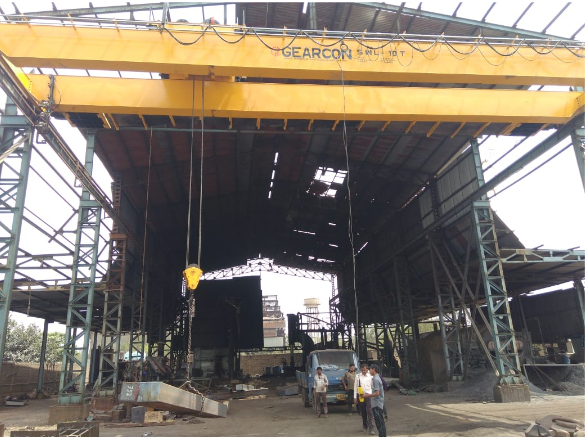
Top Double Girder EOT Crane Suppliers and Manufacturers in India
When operating heavy-duty industrial facilities, the reliability of your material handling equipment is the backbone of production. For businesses scaling their operations, choosing the right Double Girder EOT Crane Manufacturers in India is not just a procurement decision; it is a long-term investment in safety, uptime, and operational throughput.
In this comprehensive guide, we will explore the technical nuances, safety standards, and selection criteria that define top-tier crane engineering. Whether you are managing a steel mill, a massive shipyard, or a large-scale manufacturing plant, understanding how to evaluate and maintain these heavy-duty assets is crucial for maximizing your return on investment in 2026.
What is a Double Girder EOT Crane?
A Double Girder Electric Overhead Travelling (EOT) crane consists of two parallel girders that travel on a rail system installed on elevated runways. Unlike single-girder configurations, the dual-girder design supports the trolley and hoist on top of the girders, allowing for a higher hook height and superior load stability.
These cranes are engineered for heavy-duty cycles, providing the structural integrity required to move massive loads across expansive factory floors. By distributing the weight across two structural beams, these systems minimize bridge deflection, making them the preferred choice for high-capacity lifting requirements.
Technical Specifications
When evaluating equipment, technical precision is paramount. The following table outlines the general specifications typically found in high-performance heavy-duty EOT cranes.
|
Feature |
Standard Specification |
|
Lifting Capacity |
5 Tons to 100+ Tons |
|
Span Length |
5 Meters to 50+ Meters |
|
Duty Class |
M3 to M8 (IS: 3177 / IS: 807) |
|
Control System |
VVVF Drives / Remote / Cabin |
|
Lifting Speed |
Variable (Frequency Controlled) |
|
Structure |
Box-type Girders (Welded Steel) |
|
Safety Features |
Overload Limit Switch, Emergency Brakes |
Why Most Heavy-Duty EOT Cranes Fail Before 10 Years
In India’s steel and heavy engineering sectors, premature crane failure is rarely caused by lifting overload alone. In most cases, the real causes are:
- improper duty class selection
- poor gearbox alignment
- undersized wheel assemblies
- inferior welding quality
- runway misalignment
- thermal stress in high-temperature bays
One of the most overlooked issues is duty-cycle mismatch. Many facilities purchase cranes designed for intermittent use and later operate them continuously in M7/M8 conditions. This leads to accelerated motor burnout, brake wear, gearbox failures, and dangerous structural fatigue.
At Gearcon Engineering, crane systems are designed based on:
- operational frequency
- ambient temperature
- material type
- shift duration
- shock loading conditions
- future production expansion
This engineering-first approach significantly improves crane lifespan and operational reliability in high-load environments
Key Features of Double Girder EOT Cranes
The engineering behind these cranes focuses on durability and precise load management. Key features include:
- Robust Box Construction: Designed to handle stress, the box-type girder construction reduces fatigue and ensures structural longevity.
- VVVF Drive Integration: Variable Voltage Variable Frequency drives allow for smooth acceleration and deceleration, preventing load swaying and reducing wear on mechanical components.
- Dual Hoisting Systems: For critical operations, double girder designs can accommodate auxiliary hoists for high-speed, light-load maneuvers alongside the primary heavy-duty hoist.
- Maintenance Accessibility: Most designs include full-length walkways and maintenance platforms, ensuring that routine inspections can be conducted safely and efficiently.
The Hidden Cost of Cheap EOT Cranes
A lower upfront crane price often results in significantly higher lifecycle costs.
In heavy industries, even a few hours of crane downtime can disrupt:
- furnace charging
- rolling mill operations
- billet movement
- dispatch timelines
The actual financial losses usually come from:
- production stoppages
- emergency maintenance
- gearbox failures
- brake replacement frequency
- rail misalignment repairs
- power inefficiency
Many low-cost cranes also use:
- low-grade wheels
- poor heat treatment
- weak structural fabrication
- undersized motors
These issues may not appear during installation — but become severe within 2–4 years of continuous operation.
This is why large industrial facilities increasingly prioritize lifecycle reliability over initial procurement cost.
Top Industries Using Double Girder EOT Cranes in India
High-capacity lifting is a universal requirement in India’s industrial sector. The demand for Double Girder EOT Crane Manufacturers in India has surged due to growth in the following sectors:
- Steel and Metal Processing: Essential for transporting hot metal, ingots, and heavy coils.
- Infrastructure and Construction: Used in pre-cast yards and for handling heavy structural steel beams.
- Shipbuilding and Maritime: Critical for assembling ship hulls and maneuvering massive marine components.
- Power and Energy: Essential in thermal and hydro-power plants for turbine maintenance and equipment positioning.
- Heavy Engineering: Manufacturing centers that require precision placement of large-scale machine components.
Advantages of Double Girder EOT Cranes for Industrial Applications
Why choose a double girder configuration over a single girder? The primary benefits are rooted in physical mechanics and operational versatility.
- Height Utilization: Because the hoist runs on top of the girders, you gain significantly more "hook height," which is vital in facilities with low ceiling clearances relative to the load size.
- Stability: Two girders offer a stable platform that handles high-torque operations, such as magnet or grab bucket applications, far better than a single girder.
- Speed and Capacity: They are designed for higher duty cycles, meaning they can operate continuously for longer periods without overheating or excessive component fatigue.
How Steel Plants Evaluate EOT Crane Manufacturers
Modern steel and process industries no longer evaluate crane suppliers based on lifting capacity alone.
Today, procurement and engineering teams assess:
|
Evaluation Factor |
Why It Matters |
|
Duty Cycle Engineering |
Prevents premature fatigue |
|
Gearbox Reliability |
Reduces breakdown risk |
|
Crane Rail Alignment |
Impacts wheel lifespan |
|
Heat Resistance |
Critical in furnace bays |
|
Brake Redundancy |
Essential for safety |
|
Service Response Time |
Minimizes downtime |
|
Spare Availability |
Ensures operational continuity |
Manufacturers with in-house mechanical expertise and gearbox manufacturing capabilities generally deliver better long-term crane performance compared to assembly-focused vendors.
How to Choose the Right Manufacturer
Selecting among Double Girder EOT Crane Manufacturers in India requires a focus on technical expertise. Consider these factors:
- Manufacturing Heritage: Look for companies with decades of experience, such as Gearcon Engineering, which has been refining gear and crane technology since 1993.
- Compliance with IS Standards: Ensure the manufacturer follows Indian Standard codes like IS: 807 and IS: 4137.
- Post-Installation Support: Equipment of this size requires consistent maintenance. A manufacturer that offers 24/7 service and spare parts availability is non-negotiable.
- Customization Capability: Every factory floor is unique. Choose a partner that offers site-specific design rather than "off-the-shelf" solutions.
Important Safety Standards for EOT Cranes
Safety is not an option; it is a regulatory requirement. In India, EOT cranes must adhere to strict safety protocols:
- Overload Protection: Systems must include automatic limit switches to prevent loads exceeding the crane’s rated capacity.
- Emergency Braking: Every crane must feature an emergency stop system that cuts off power to the drive motors instantly.
- Safety Interlocks: Ensures that the crane cannot move if the maintenance gate is open or if the bridge is locked in position.
- Regular Load Testing: Periodic testing using calibrated test weights is required to certify the crane’s ongoing capacity.
Maintenance Tips for Double Girder EOT Cranes
To ensure your investment lasts for decades, follow a strict maintenance regimen:
- Weekly Inspections: Check wire ropes for signs of fraying or wear and inspect hooks for deformation.
- Lubrication: Gearboxes and bearings require high-quality industrial lubricants. Gearcon Engineering recommends adhering to a strict greasing schedule based on duty cycles.
- Electrical Check: Tighten electrical connections and inspect control panels for dust accumulation, which can cause heat buildup.
- Annual Overhaul: Perform a deep-dive inspection of structural welds and rail alignment every 12 months.
Real Industrial Environments Require Different Crane Engineering
A crane operating in a fabrication workshop faces completely different stress conditions compared to cranes used in:
- steel melting shops
- sponge iron plants
- rolling mills
- foundries
- power plants
For example:
- Steel plants generate severe radiant heat
- Scrap handling creates shock loading
- Continuous production causes motor overheating
- Dust contamination damages electrical panels
- Uneven loading increases bridge torsion
This is why heavy-duty industrial cranes cannot be treated as standard catalog equipment.
At Gearcon Engineering, crane systems are engineered according to the actual operating environment rather than generic lifting specifications.
Frequently Asked Questions (FAQs)
1. Why is the duty class important when choosing a crane?
The duty class (M3 to M8) defines the intensity of use. An M3 crane is for intermittent use, while an M8 crane is designed for continuous, round-the-clock operation. Choosing the wrong class will lead to premature failure.
2. What makes Gearcon Engineering a reliable partner?
With over 33 years of experience in gear technology and material handling, Gearcon combines legacy expertise with modern design. They are recognized for their robust, custom-engineered solutions that prioritize safety and long-term performance.
3. How often should EOT cranes be serviced?
Routine inspection should be weekly. However, a comprehensive professional maintenance service by an expert team should be scheduled at least every six months to ensure all safety systems are functioning as intended.
4. Can Double Girder cranes be retrofitted for automation?
Yes. Modern Double Girder EOT Crane Manufacturers in India now offer advanced automation packages, including remote-controlled operations, anti-sway technology, and real-time load monitoring data.
5. What is the lifespan of an EOT crane?
With proper maintenance and timely replacement of wear-and-tear parts, a high-quality EOT crane can operate efficiently for 20 to 30 years or more in a heavy-industrial environment.
Conclusion
The selection of Double Girder EOT Crane Manufacturers in India is a critical decision that influences your production efficiency and workplace safety. By prioritizing technical compliance, robust engineering, and reliable long-term support, companies can ensure their operations run smoothly for decades.
Gearcon Engineering continues to lead the way, providing tailored solutions that combine advanced mechanical design with the durability required for India’s toughest industrial environments. Whether you are upgrading your facility or setting up a new plant, focusing on quality over convenience will ensure that your material handling systems remain a true asset to your business in 2026 and beyond.
Get a Custom Quote for Your Industrial Crane Project" Speak with our engineering team to discuss your capacity needs, technical specifications, and site requirements. Let’s get your project moving.
Contact Gearcon Engineering & Gearcon Cranes
- Corporate Office: 1445 Gearcon House, Adarsh Nagar, Durg, Chhattisgarh (India)
- Works/Manufacturing: G.E. Road, Tedesara, Rajnandgaon, Chhattisgarh (India)
Direct Inquiry Lines
- Sales & Technical Support: +91-9039067094 (Mr. Saurabh Lalwani)
- Project Consultation: +91-7771012990 (Mr. Parvinder Singh)
- Operations & Logistics: +91-9575101099 (Mr. Sheetal Deshmukh)
- General Helpline: +91-9977944099 (Landline)
Email for Formal Quotations & RFQs
- Inquiry: info@gearconengg.com
- Crane Sales: gearconcranes@gmail.com
- General Correspondence: gearcon@rediffmail.com