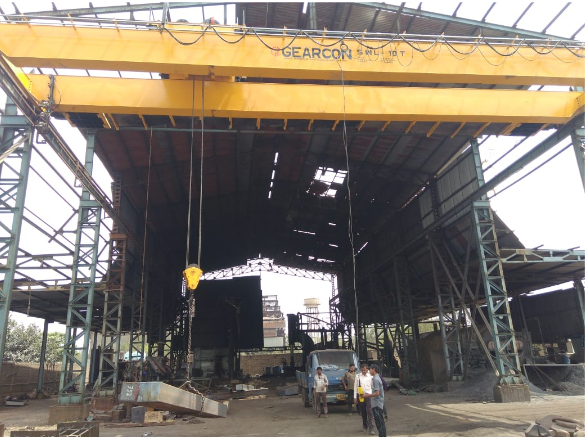
Top Goliath and Gantry Crane Manufacturers in India
Efficiency and precision are the bedrocks of modern industrial success. When handling heavy materials in environments where overhead space is constrained, or structural support is unavailable, Goliath Crane Manufacturers in India provide the critical infrastructure required to maintain operational flow. If you are researching these systems, you are likely looking for solutions that balance high-capacity performance with long-term, low-maintenance reliability.
As we navigate 2026, the industrial landscape demands more than just raw lifting power. Buyers today prioritize energy efficiency, predictive maintenance, and structural longevity. In this guide, we break down everything you need to know about Gantry and Goliath systems—from their technical distinctions to the future trends shaping their design.
What is a Gantry Crane?
A Gantry crane is a type of overhead crane that utilizes a bridge girder supported by legs. Unlike traditional EOT (Electric Overhead Traveling) cranes that require an existing building runway system, Gantry cranes operate on rails installed on the floor. This structural independence makes them incredibly versatile for both indoor manufacturing hubs and expansive outdoor yards.
What is a Goliath Crane?
Often used interchangeably with "Gantry," the term "Goliath" typically refers to high-capacity, heavy-duty Gantry systems. These machines are the "heavyweights" of the material handling world, designed to manage massive loads in environments like steel mills, shipyards, and large-scale infrastructure projects. A Goliath crane is the go-to solution when you need "unstoppable" performance for oversized components.
Difference Between Gantry Crane and Goliath Crane
While the terms are often used as synonyms, the primary difference lies in the application scale:
- Gantry Crane: A broad category encompassing various sizes, from small, portable workstation units to larger systems.
- Goliath Crane: Refers specifically to massive, heavy-duty Gantry structures. These are almost always fixed-rail systems designed for extreme loads (often exceeding 50+ tons) and harsh, outdoor industrial environments.
Types of Gantry Cranes
Understanding the configuration is key to operational efficiency:
- Full Gantry: Supported by two legs, moving on ground-level rails.
- Semi-Gantry: One side travels on an elevated building runway, while the other side runs on a floor rail. This is ideal for space-saving inside workshops.
- Cantilever Gantry: Features extensions beyond the runway rails, allowing the hoist to reach outside the primary track area—perfect for loading and unloading trucks or ships.
- Truss/Box Girder Designs: Truss designs reduce wind resistance for outdoor use, while box girders provide superior structural rigidity for heavy-duty lifting.
Industries Using Gantry & Goliath Cranes
The versatility of these machines makes them indispensable across several sectors:
- Steel & Metal: Handling heavy coils, scrap, and structural steel beams.
- Infrastructure: Moving bridge segments, tunnel-boring machine components, and large-scale concrete.
- Power Plants: Installing turbines, generators, and auxiliary machinery.
- Shipbuilding: Positioning hull sections and massive marine equipment.
- Logistics & Ports: Managing container traffic and oversized cargo.
Indoor vs Outdoor Crane Applications
- Indoor: Focuses on precision, noise reduction, and compact footprints. Indoor systems often utilize electric hoists and advanced VFDs for smooth handling in confined shop bays.
- Outdoor: Requires weatherproofing, corrosion-resistant paints, and robust structural designs to handle wind loading and temperature fluctuations. Outdoor cranes must be built for durability in changing atmospheric conditions.
Electric Gantry Crane Benefits
In 2026, the shift toward electric drive systems is driven by:
- Electric hoists allow for minute, controlled movements essential for delicate assemblies.
- Energy recovery systems (regenerative braking) lower operational costs and environmental impact.
- Electric systems are easier to integrate with modern IoT monitoring and smart-sensor safety protocols.
Load Capacity Comparison
|
Capacity Range |
Ideal Application |
|
Light (Up to 5 Tons) |
Workshop assembly, maintenance, and light fabrication. |
|
Medium (5 – 20 Tons) |
Standard warehousing and medium manufacturing. |
|
Heavy-Duty (20 – 80+ Tons) |
Steel mills, shipping yards, and major infrastructure. |
How to Select the Right Crane
Selecting a partner of Gantry crane manufacturers is a strategic decision. To ensure your investment yields the highest ROI:
- Define Your Duty Class: Matches the crane’s design to your usage frequency (e.g., M3 for intermittent use vs. M8 for continuous, 24/7 cycles).
- Assess Environmental Factors: Don’t compromise on weatherproofing if your site is outdoors.
- Look for "Under-One-Roof" Partners: Choose a manufacturer that handles everything from engineering and CNC fabrication to final on-site installation and testing. This ensures accountability for every component.
- Check Certification: Always verify compliance with IS: 807, IS: 4137, and IS: 3177 standards to ensure local regulatory safety.
Technical Specification & Consultation
Gearcon Engineering, with over 30 years of experience, provides custom-engineered lifting solutions that adhere to the highest Indian safety standards.
|
Feature |
Technical Specification |
|
Capacity |
5 Tons to 80 Tons |
|
Structure |
Box or Truss Girder (Full or Semi-Gantry) |
|
Standards |
IS: 807, IS: 4137, IS: 3177 |
|
Duty Class |
M3 - M8 |
|
Drive Systems |
Variable Frequency Drive (VFD) for precision |
|
Support |
After-sales AMC, inspection & spare parts |
|
Consultation |
Future Trends in Industrial Crane Technology
As we look forward, the industry is embracing "Smart Cranes." This includes:
- Predictive Maintenance: IoT sensors that alert operators to motor stress or cable wear before a failure occurs.
- Enhanced Safety: Real-time anti-collision systems and automated overload prevention.
- Ergonomics: Advanced remote and cabin designs that reduce operator fatigue and exposure to harsh environments.
Frequently Asked Questions (FAQ)
1. Is a Goliath crane more expensive than an EOT crane?
While the initial civil works for Goliath cranes are often cheaper (no need for heavy factory columns), the crane structure itself may be more robust to handle freestanding loads. Over the lifetime of the project, they are often the more cost-effective choice for heavy, yard-based applications.
2. Can I get a custom span for my workshop?
Yes. Leading Semi goliath crane manufacturers offer custom spans and heights tailored to your building’s dimensions.
3. What is the most important safety feature to look for?
Overload protection and emergency braking systems are non-negotiable for operator safety.
4. How do I start the procurement process?
The best approach is to define your "maximum weight" and "workspace dimensions," then reach out to a qualified manufacturer for a site feasibility study.
5. How can I get a quote for a specific capacity?
You can connect with the technical team at Gearcon Engineering via their Contact Portal to discuss your project requirements and receive a professional consultation.
Ready to Upgrade Your Infrastructure?
Investing in the right material handling equipment is a long-term strategic decision. At Gearcon Engineering, we combine over 30 years of engineering expertise with state-of-the-art CNC fabrication to provide reliable, high-capacity Goliath and Gantry solutions tailored to your specific facility needs.
Get in touch with our engineering team for a site feasibility study or to discuss your custom project requirements:
- Phone: +91 9039067094
- Corporate Office: Gearcon House, Adarsh Nagar, Durg, Chhattisgarh.
- Manufacturing Unit: Tedesara, Rajnandgaon, Chhattisgarh.
- Online Inquiry: Click here to Connect with Gearcon Engineering for a Custom Quote