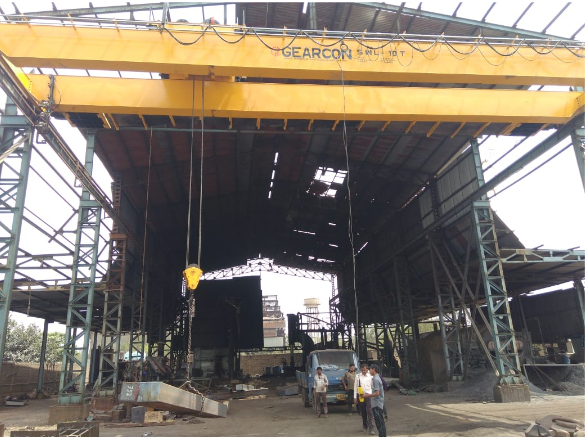
Which Electric Wire Rope Hoist Is Best in India
In the competitive landscape of Indian industrial manufacturing, material handling efficiency is the backbone of production. Whether you are operating a high-capacity steel plant or a precision engineering workshop, selecting the right electric wire rope hoist in India can mean the difference between seamless operations and costly downtime. As industrial automation grows in 2026, facility managers are increasingly moving away from manual or inefficient lifting methods, seeking equipment that offers both durability and safety.
Choosing the right equipment requires navigating a landscape of varying technical standards, duty cycles, and environmental requirements. If you are struggling with frequent maintenance issues or bottlenecks in your production line, understanding how to select a robust electric wire rope hoist in India is your first step toward operational excellence. In this guide, we break down everything you need to know to make an informed investment, ensuring your facility remains safe, productive, and ahead of the curve.
What Is an Electric Wire Rope Hoist?
An electric wire rope hoist is a specialized lifting device used to raise, lower, and move heavy materials horizontally along a girder. At its core, the working principle involves an electric motor driving a wire rope drum through a gearbox. This mechanical assembly allows for the controlled winding and unwinding of a high-tensile wire rope, which is attached to a load hook.
Key Industrial Applications
These hoists are integral to industries that require reliable load management, including:
- Steel Plants: Handling raw materials and finished heavy structures.
- Manufacturing & Engineering: Moving heavy machinery components and assemblies.
- Automotive: Supporting assembly lines and engine block handling.
- Warehousing: Maximizing vertical storage efficiency.
- Construction: Lifting pre-fabricated structures and heavy building materials.
Types of Electric Wire Rope Hoists Used in India
To ensure peak performance, you must choose a configuration that fits your facility's physical constraints and operational requirements:
- Single Girder Hoists: Designed for lighter to medium loads where space is a priority. These are ideal for workshops and warehouses.
- Double Girder Hoists: Best suited for high-capacity applications requiring extreme stability and higher hook heights.
- Low Headroom Hoists: Engineered specifically for facilities with limited vertical space, allowing for maximum lift without compromising safety.
- Flameproof Hoists: Essential for hazardous environments (such as chemical plants or paint shops) where ignition prevention is mandatory.
Factors to Consider Before Choosing an Electric Wire Rope Hoist
Selecting the right electric wire rope hoist in India is not just about price; it is about performance sustainability. Consider these critical metrics:
- Load Capacity: Always calculate your maximum load and add a safety buffer. Never operate at 100% capacity consistently.
- Lifting Height: Ensure the hoist meets your vertical travel requirements.
- Duty Cycle: This defines how often the hoist runs. Choosing a low-duty hoist for a high-intensity environment leads to rapid motor burnout.
- Safety Features: Ensure the unit includes thermal overload protection, limit switches, and an emergency stop system.
- Power Supply: Verify the voltage compatibility with your industrial power grid.
- Maintenance Access: A modular design, like those engineered by Gearcon Engineering, significantly reduces downtime during service.
Electric Wire Rope Hoist vs. Chain Hoist
Many operators debate between wire rope and chain systems. The following table highlights the operational differences:
|
Feature |
Electric Wire Rope Hoist |
Electric Chain Hoist |
|
Load Capacity |
Higher (Up to 15T+) |
Generally Lower |
|
Durability |
Excellent for Heavy Duty |
Good for Light/Medium Duty |
|
Maintenance |
Lower Frequency |
Higher Wear on Links |
|
Speed |
Faster |
Slower |
|
Usage |
Continuous/Intense |
Intermittent |
|
Action |
Common Mistakes to Avoid When Buying a Hoist
- Prioritizing Price Over Quality: An electric wire rope hoist in India is a long-term asset. Buying solely based on a low price tag often leads to high repair costs and safety risks later.
- Ignoring Duty Classification: Using a standard hoist in a high-temperature or continuous-duty environment will inevitably lead to motor failure.
- Overlooking After-Sales Support: Lifting equipment requires periodic inspections. Partnering with a manufacturer that lacks local service support is a significant operational risk.
Why Choose Gearcon Engineering?
|
Feature |
Generic Market Suppliers |
Gearcon Engineering |
|
Engineering Approach |
Standardized, "Off-the-shelf" |
Custom-Engineered for Site |
|
Material Quality |
Standard Grade |
High-Tensile Alloy/Precision Steel |
|
Industry Compliance |
Basic Documentation |
Full IS Standard Compliance |
|
Customization |
Limited / Non-existent |
Full Customization (Headroom/Duty) |
|
After-Sales Support |
Call-center/Remote |
On-site/Direct Engineer Support |
|
Spare Parts |
Hard to source |
Readily Available (Directly) |
|
Project History |
Variable |
Proven Ancillary Unit to SAIL |
|
Consultation |
Transactional |
Technical Solutioning |
|
Action |
Search Elsewhere |
Why Top Industries like SAIL Prefer Gearcon Engineering
Gearcon Engineering has established itself as a cornerstone of the Indian material handling sector. Their approach to manufacturing an electric wire rope hoist in India centers on engineering precision rather than mass-market commoditization.
Key Advantages:
- Customization: Gearcon specializes in tailoring hoists to unique headroom or duty cycle requirements.
- Safety Standards: All equipment is built to conform to rigorous Indian standards (IS:3938), ensuring reliability in demanding steel mill environments.
- Engineering Expertise: With over three decades of experience, their design team understands the nuances of the Indian industrial power supply and environmental conditions.
- Robust Support: From initial site survey to installation and after-sales maintenance, they provide end-to-end support, ensuring your operations never come to a halt.
FAQs
Which hoist is best for heavy loads?
For heavy loads exceeding 5 tonnes, an electric wire rope hoist is almost always superior to a chain hoist due to its speed, durability, and smooth lifting characteristics.
What is the lifespan of a wire rope hoist?
With proper maintenance, regular lubrication, and adherence to duty cycle limits, a high-quality wire rope hoist can last well over 10–15 years in a standard industrial setting.
Which industries use electric hoists?
They are utilized across virtually all sectors, including steel plants, automotive assembly, power generation, and general manufacturing.
What capacity hoist should I choose?
You should choose a capacity that matches your heaviest load plus an additional 15–20% safety margin to prevent overload strain.
What is the difference between chain and wire rope hoists?
Wire rope hoists offer greater lifting speeds and are better suited for continuous or heavy-duty cycles, whereas chain hoists are often more compact but limited in capacity.
GET IN TOUCH
For customized lifting solutions and professional consultation, reach out to the experts at Gearcon Engineering.
Corporate Office:
1445 Gearcon House, Adarsh Nagar, Durg, Chhattisgarh, India
Works:
G.E. Road, Tedesara, Rajnandgaon, Chhattisgarh, India
Contact Details:
- Mr. Saurabh Lalwani: +91-9039067094
- Mr. Parvinder Singh: +91-7771012990
- Mr. Sheetal Deshmukh: +91-9575101099
- Landline: +91-9977944099
Email: gearcon@rediffmail.com | gearconcranes@gmail.com | info@gearconengg.com
Website: Gearcon Engineering